The floor you stand on barefoot.
Guides · Materials
You choose a bathroom floor with your eyes, but you live with it through your feet — barefoot, wet, six in the morning. Here is how porcelain, ceramic and natural stone actually differ once the showroom lights are off.
Porcelain: the workhorse
Porcelain is clay fired harder and denser than anything else on this list. It barely absorbs water, shrugs off heels and dropped bottles, and its printed faces have gotten good enough that convincing marble-looks and wood-looks are now ordinary. For a bathroom floor it is the default answer, and it has earned that: most of the floors in our gallery are porcelain.
Ceramic: the wall's best friend
Ceramic is porcelain's softer, friendlier-priced cousin. Easier to cut, kinder to budgets, and made in every color a wall could want. On a guest-bath floor it serves fine. Under heavy daily traffic its glaze can chip and show the clay beneath — which is why we mostly set it where it excels: walls, wainscots and backsplashes, where it never takes a footstep.
Marble and natural stone: the real thing
No print fully fakes stone's depth — every piece is one of one. But stone is a relationship. It wants sealing, it etches when something acidic sits on it, and it ages into a patina. The clients who love their stone floors are the ones who wanted exactly that. If you want the look without the relationship, today's marble-look porcelain is the honest compromise — underfoot, most people never feel the difference.
What matters more than the material
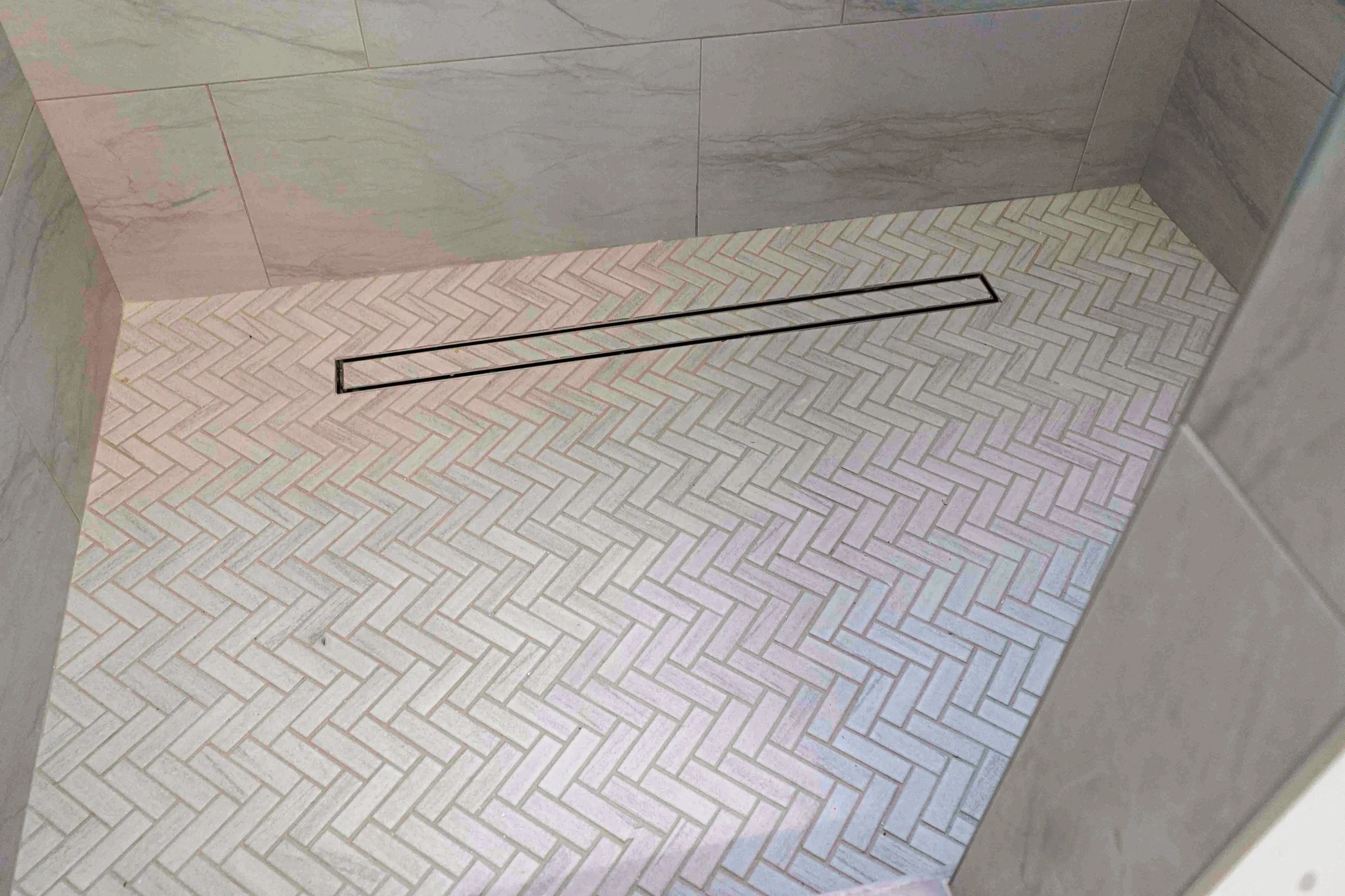
- Grip. Wet tile is judged by its texture and its joints. Smaller tile means more grout lines, and grout is what your foot holds onto — that is why shower floors are mosaic. For the main floor, look for a wet DCOF rating of 0.42 or better; we check it before you fall in love with a sample.
- Warmth. Tile conducts heat away from skin — that famous cold floor. Electric heating mats under porcelain are the upgrade our clients thank us for most, and they must be decided before tile day, never after.
- The grout you choose. Grout is the floor's future color. Cement grout ages and wants sealing; epoxy costs more and keeps the color you picked. Either way, choose the grout with the tile, not after it.
- What is under everything. Georgia clay moves, and a slab crack telegraphs straight up into rigid tile. An uncoupling membrane between slab and tile absorbs that movement — invisible insurance we treat as standard, not as an extra.
Questions we hear
Does marble-look porcelain really pass for marble?
Across a floor, for almost everyone, yes. Where the difference shows is up close and in repetition — printed faces repeat, stone never does. On a large floor we lay out the pattern to keep the repeats apart.
What size tile should a small bathroom use?
Bigger than instinct says. Fewer joints read calmer and make the room feel larger; a 12 by 24 works in surprisingly small rooms. Small tile belongs where slope and grip need it — the shower floor.
Can new tile go over the old floor?
Sometimes. It depends on how sound the old bed is, what doubling the height does at doors and transitions, and what is underneath. It is a walk-through question — we answer it at the estimate, not on principle.
Are heated floors worth it?
They are the feature past clients mention most, years later. The only real mistake with heated floors is deciding too late — after tile, the moment has passed.
Choosing a floor? Bring us the pictures you have been saving. We will tell you what each material really asks of you — and what will still look right when the trend has passed.
Get a free estimateor call 678-983-4615